|
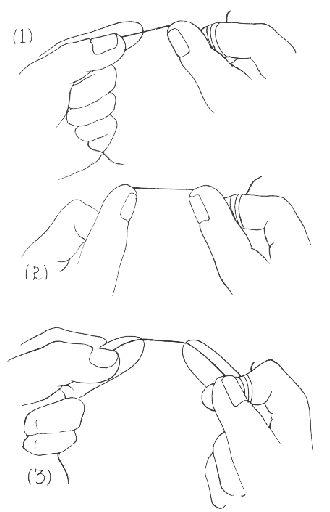
1. Cut off a piece of floss about 2 to 3
feet long.
2. Wrap one end
with 2 or 3 turns around the first phalanx of the
right index finger, for the purpose of anchoring or
holding it. ( Figure 18 ) .
3. Bring the
floss over the end of the right thumb which is also
held against the finger around which the floss is
anchored. (Figure 18).
4. Grasp the
floss with the left hand and bring it over the end
of the first finger of that hand. Thus a length of
floss, about 1 inch long, is held between the thumb
of the right hand and the first finger of the left
hand. (Figure 18 ( 1 ) ) .
5. Now with the
thumb inside of the cheek and the finger inside of
the mouth, the floss is carried to the very bottom
of the gingival crevice back of the last right upper
tooth, drawn slightly endways through the crevice
and crossways outward across the distal surface so
as to scrape off and dislodge the soft bacterial
material on the tooth within the crevice and
outwards.
6.
Holding the floss in the same way,
pass it into the next interproximal space. Carry it
to the bottom of the posterior gingival crevice and
clean the mesial surface of that tooth. Now, before
withdrawing the floss from this interproximal space,
clean the distal surface of the other tooth in the
same way. Then withdraw the floss and move on to the
next interproximal space, etc., until the proximal
surfaces of all teeth have been cleaned.
7.
In passing the floss between contacting teeth it is
not forced directly in and out. It should be held
over the contact and drawn gently and slightly back
and forth endways. This allows the low-twist,
unwaxed floss to flatten and pass between the
contacting teeth with the greatest ease. |